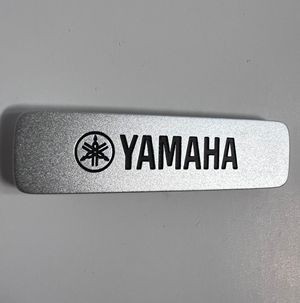
1. Complex variety of surface treatment effects:
The metal sticker surface will be twill, horizontal, matte, mirror, three-dimensional (protrusion) in comparison, stamping can generally only be processed to the required shape size or limited three-dimensional effect, but the surface texture is general Unable to achieve; if product design involves more complex surface effects, electroforming technology is generally used.
2. Good wear resistance:
The surface of electroforming signs is generally chromium-plated. The hardness of chromium is extremely high, which can reach HV780-910, and the hardness of stainless steel is generally HV180-650; therefore, there are chromium plating on the surface of many superhard tools to enhance the hardness and wear resistance of the tools. Sex; the product will not change in appearance under normal use.
At present, most daily necessities (mobile phones, digital cameras, MP3, MP4, etc.) use plastic parts, and the surface is painted. After a period of use, these parts will peel off, fade, wear out, and expose the plastic background, which will seriously affect The appearance of the product, so the usual contact parts of high-end products generally do not adopt this process.
3. High polishability:
Nickel is highly polished metal. It is an excellent substrate for chromium electroplating. Electroformed nickel is chromium-plated after polishing, which can achieve a much more perfect mirror effect than stainless steel.
4. Surface effect:
The metal stickers sign can be processed with convex or concave or curved surfaces, and the height can be processed between 0.2mm and 0.7mm. The literal base gloss can be processed into the mirror, brushed, frosted brush pattern, planed pattern, grid, manganese shot effect, and thick line pattern, etc., and can also be made into a special base according to customer requirements.
The literal color can be made into bright gold, bright chrome, nickel, spreading anti-counterfeiting colors, etc., or various lacquer colors, and the bottom plate can be processed into various lacquer colors (the bottom surface is 0.1mm-0.4mm) or sand texture, various electroplating colors Electroplating pattern.
5. Thickness:
Generally divided into the thin label and 3d thick label.
The thickness of the thin label is about 0.04-0.1mm. When the three-dimensional effect is not required, the thin label is generally used.
The thickness of the thick label is generally about 0.2-0.3mm. If the product needs to achieve a predetermined three-dimensional effect, a thick label is required.